GED or IGCSE in Malaysia: Which One Should You Choose?
Parents ask us this more than any other question, and the honest answer is that it depends on facts about your own situation rather than on which qualification is better. They are not competing versions of the same product. One is a programme of education; the other is a proof of equivalency.
What each one actually is
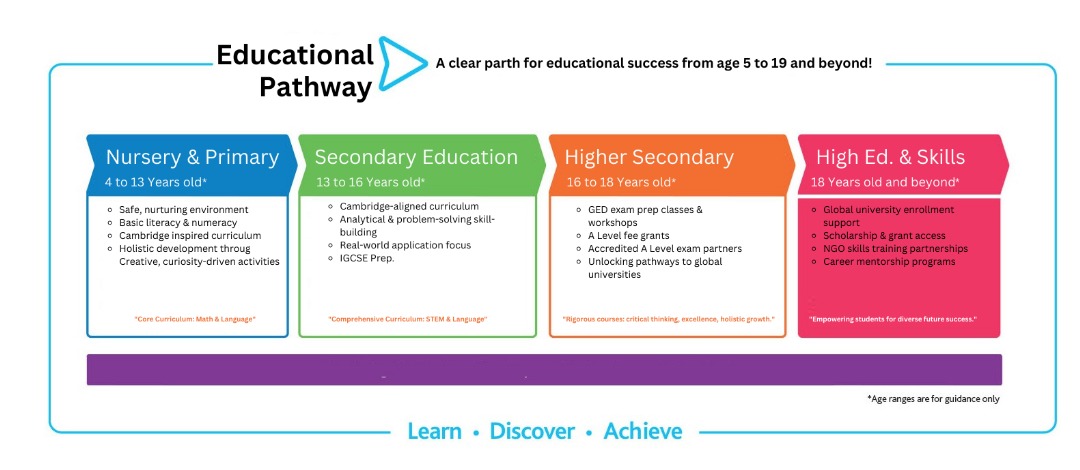
IGCSE — the International General Certificate of Secondary Education — is a two-year Cambridge programme, normally taken between roughly 14 and 16. Students study a spread of subjects and sit an examination in each. It is a secondary education, with the depth and the timetable that implies.
The GED is four subject tests that certify high-school-level academic knowledge. There is no enrolment period, no minimum number of study hours and no attendance requirement. You prepare however you like, then sit the tests. It certifies that you know the material; it does not describe how you came to know it.
Choose IGCSE if the student is 12 to 16
For a student in that range who is able to attend regularly, IGCSE is the stronger choice, and it is what we recommend. It is a fuller education, it is recognised more widely across Commonwealth countries including Malaysia, and it keeps more doors open — including A-Levels and the university routes that expect them.
It also builds study habits over two years that an examination alone does not. That matters more than it sounds for a student who may face university later.
Choose the GED if the student is over 16, or the route is blocked
The GED becomes the right answer when IGCSE is not realistically available. That happens in a few recognisable situations:
- The student is past 16 and starting a two-year programme now would mean finishing at 19 or 20.
- Education was interrupted — by displacement, by a family move, by years without access to a school — and there is ground to make up that a fixed two-year timetable does not allow for.
- The cost of a full IGCSE programme is out of reach, while four subject tests are not.
- The student is working or caring for family and cannot commit to a fixed daily timetable.
- The family's future may be in another country, particularly the United States or Canada, where the GED is well understood.
You are not locked in
Students who start IGCSE and cannot complete it — most often for financial reasons — can move to GED preparation after 16. The work already done is not wasted: much of the IGCSE mathematics and science syllabus overlaps directly with what the GED tests, and a student who has covered it is usually closer to ready than they expect.
The honest disadvantages of each
IGCSE takes two years and costs more. It requires a regular timetable that not every family can sustain, and starting it late means finishing late.
The GED is narrower. Four subject tests do not amount to a secondary education, and a student who passes them has genuinely learned less than one who completed IGCSE. Its social studies content is largely American, which is unfamiliar ground for students educated elsewhere. And recognition by Malaysian institutions varies — some accept it, others ask for more — so it needs checking against the specific place you are aiming at rather than assumed.
A short way to decide
- Under 16 and able to attend regularly: IGCSE.
- Over 16, or education interrupted, or unable to commit to a fixed timetable: GED.
- Between the two and unsure: ask what the student wants to do next, then check what that specific college or programme requires. That answer usually settles it.
We teach both, live online, to students anywhere in Malaysia. See Online Secondary