Education Options for Refugee Children in Malaysia
Malaysia is not a signatory to the 1951 UN Refugee Convention. In practice that means refugee status is not formally recognised in law, and refugee children cannot enrol in government schools. For a family that has already lost a home, this is often the second loss, and it is the one that compounds: a year out of school becomes two, and two becomes a gap that is genuinely hard to close.
What follows is a plain account of what remains available. We run one of these options and are not neutral about it, but the others are real and some will suit a family better than ours.
Community learning centres
Most refugee education in Malaysia happens in learning centres run by community organisations, faith groups and NGOs. They are not government schools and do not issue government certificates. Quality, fees and stability vary enormously — some have been running for over a decade with qualified teachers, others open and close within a year.
Questions worth asking any centre before enrolling: how long has it been running, what qualification does a student leave with, what happens if a family cannot pay one month, and what have past students gone on to do. The last question is the most revealing, and a centre that cannot answer it concretely is telling you something.
International qualifications
Because the national system is closed, the realistic route to a recognised certificate runs through international qualifications that do not require government school enrolment. Two matter most in practice.
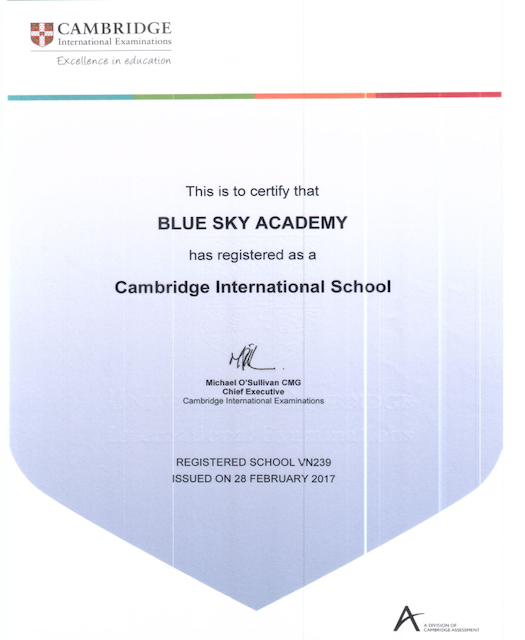
Cambridge IGCSE
An internationally recognised secondary qualification, normally taken around 14 to 16. It is the stronger option for a child still of school age who can attend regularly, and it is recognised in Malaysia and across Commonwealth countries.
The GED
Four subject tests certifying high-school equivalency, sat unrestricted from 18 or at 17 with a waiver, and with no requirement to have attended school. For a young person whose education was interrupted for years — which describes a great many refugee students — it is frequently the only realistic route to a recognised certificate. It is recognised by the International Organization for Migration, which matters if a resettlement case is in progress.
Informal and online learning
Some families rely on online courses, volunteer tutoring, or teaching at home. This can work, particularly for a motivated older student, and it costs little. The difficulty is that it usually ends without a certificate, and a young adult with real knowledge but nothing to prove it is in a hard position when applying anywhere.
If you go this route, it is worth aiming it at a qualification from the start rather than studying generally and hoping to formalise it later.
What to think about beyond the classroom
- Documentation. Ask early what a programme will need, and what it can work around. Many refugee families do not have complete papers, and a centre used to that situation will say so plainly.
- Cost, honestly discussed. A centre serving low-income families should be able to talk about what you can actually pay rather than quoting one number and leaving it there.
- Language. A child who has been out of school for years may need language support before subject teaching helps at all.
- Continuity. A qualification that takes two years is only useful if the programme is still running in two years.
- What comes after. Ask what the centre does once the certificate exists — university applications, scholarships, career guidance. A certificate with nobody to help you use it is half a result.
Where we fit
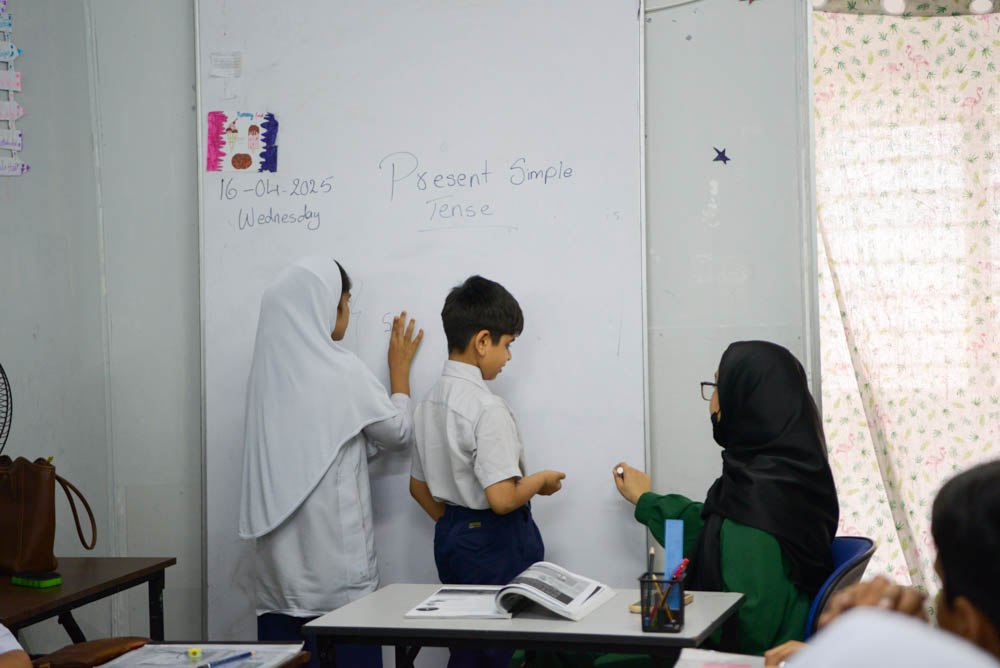
Empower Learning System is a low-cost learning centre in Batu Caves, Selangor. Early Years and primary are taught in person; all of our secondary education, including Cambridge IGCSE and GED preparation, is taught online to students anywhere in Malaysia. Support options exist for families with limited means, discussed case by case.
One of our students, Waris Ahmed, arrived in Malaysia as a refugee in 2019, studied online, passed the GED and is now going on to a Bachelor of Science in Health Science. That is the shape of the outcome we are aiming at: not the certificate, but what it opens.
Read his story in his own words. Waris Ahmed's journey